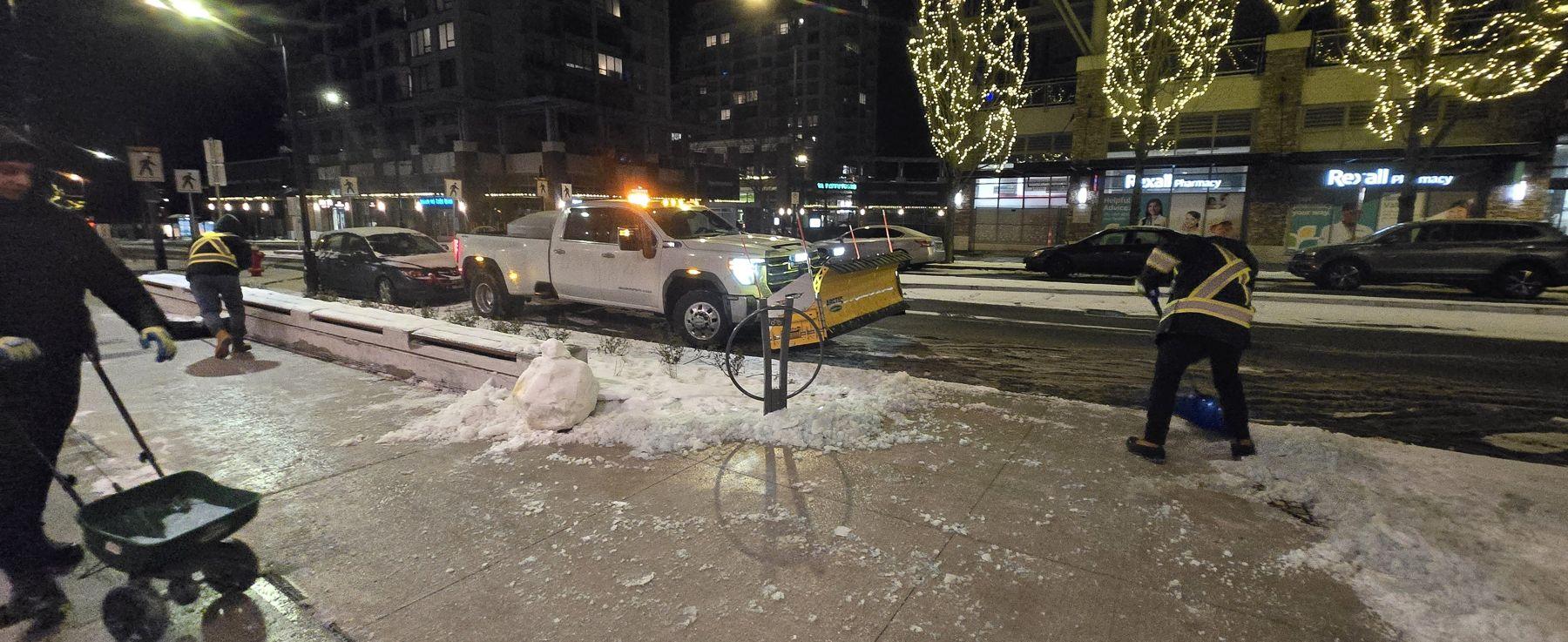
Eco-friendly de-icing
We make our own salt brine — so your property needs far less salt.
Liquid anti-icing is how highway crews keep roads open. We bring it to strata and commercial properties across Surrey, White Rock and Langley, with brine mixed at our own South Surrey yard.
Get a free winter quoteHow it works
From our yard to your walkways
- 01
Mixed at our yard
We dissolve salt in water at our 8th Avenue yard to the concentration that melts ice best (about 23% salt). Making it ourselves means consistent strength and supply on hand before every storm.
- 02
Triggered by the forecast
When road-weather stations and the forecast show a freeze or snowfall coming, contracted sites are scheduled for pre-treatment — usually the evening before.
- 03
Sprayed, not thrown
Our HillTip Combi units lay brine in even, measured bands across lots, ramps and walkways. No piles, no bounce into the planting, no guesswork about how much went down.
- 04
Ice can't bond
As the temperature drops, the brine film keeps snow and frost from bonding to the pavement. Plows and shovels scrape clean, and far less follow-up salt is needed.
The old way
Reactive rock salt
- — Waits for ice to form, then treats it
- — Heavy applications to break an existing bond
- — Bounces and gets plowed onto lawns and beds
- — Pits concrete, stains pavers, burns hedges
- — Tracked into lobbies, carpets and paws
- — Washes into storm drains and creeks in the thaw
The Smiler way
Brine anti-icing + targeted de-icing
- ✓ Goes down before the freeze
- ✓ Thin, measured liquid — far less salt
- ✓ Stays where it's sprayed
- ✓ Gentler on concrete, pavers and planting
- ✓ No crunchy residue indoors
- ✓ Less salt reaching the Little Campbell, Nicomekl and Serpentine
Eco-friendly de-icing
We make our own salt brine. You use far less salt.
Most contractors wait for ice, then throw rock salt at it. We get ahead of it: liquid brine, mixed at our South Surrey yard, sprayed before the freeze so ice never bonds. Safer walkways, less salt in the creeks, and less damage to the concrete and landscaping you pay to maintain.
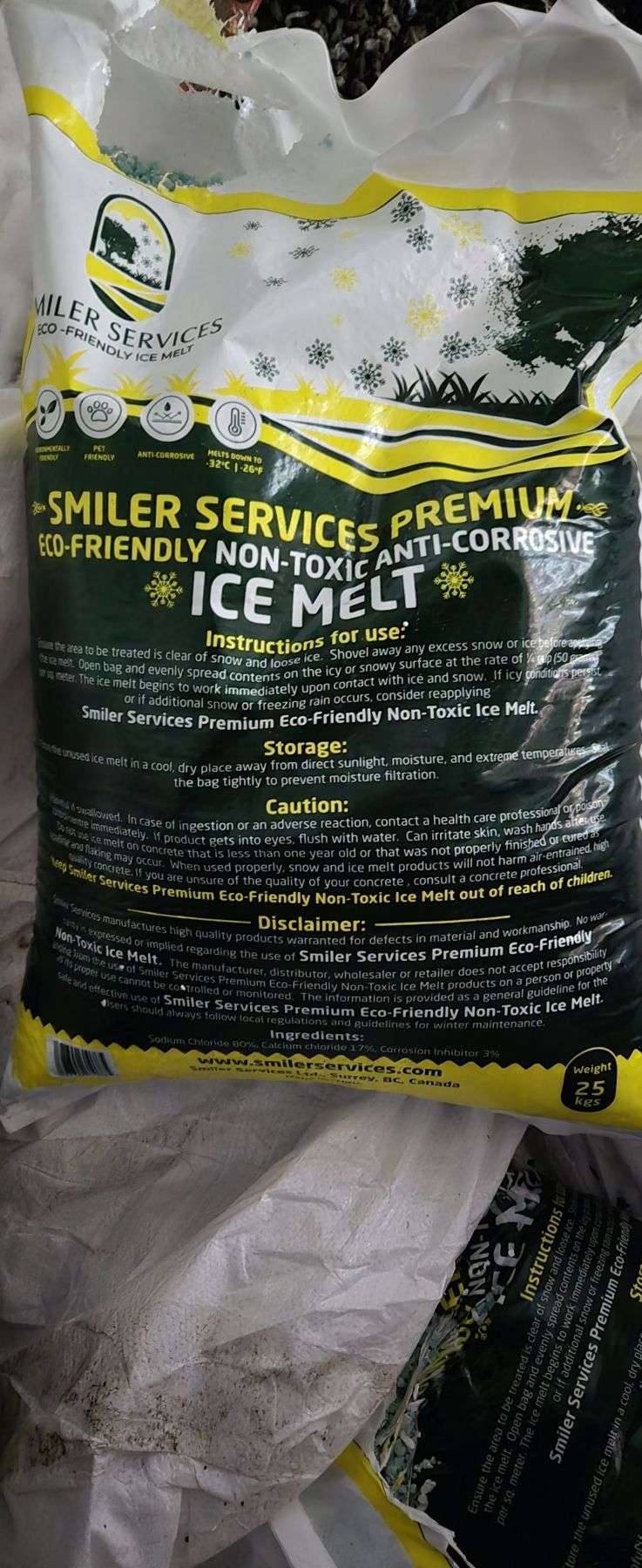
Our own product
Smiler Services Premium eco-friendly ice melt
Pet-friendly and anti-corrosive, with a corrosion inhibitor to protect concrete, rated down to −32 °C. It goes down only where brine and plowing leave off.
Made in-house
We mix our own salt brine at our South Surrey yard, so we control the concentration and always have supply when a storm hits — no waiting on a distributor.
Far less salt on the ground
Brine goes on before ice forms, so it does the job with a fraction of the salt that reactive rock-salting needs. Less salt means less to track into lobbies and less washing into storm drains and creeks.
Kinder to concrete, pavers & plants
Measured liquid application avoids the piles of rock salt that pit concrete, stain pavers and burn lawn edges and shrubs every spring — the same landscaping our summer crews look after.
Our own eco ice melt
Where granular product is needed — entrances, stairs, pet-relief spots — we spread Smiler Services Premium, our own-label pet-friendly, anti-corrosive ice melt with a built-in corrosion inhibitor, rated down to −32 °C.
FAQ
Salt brine questions
What is salt brine?
Salt brine is salt dissolved in water. Applied as a liquid before a freeze or snowfall, it lowers the freezing point at the surface and stops ice from bonding to pavement. It is the same anti-icing method highway agencies use across North America.
Why is brine more eco-friendly than rock salt?
Brine is applied before ice forms, in measured amounts, and stays where it is sprayed. Rock salt is usually applied after ice has formed and in larger quantities, and much of it bounces or is plowed off onto lawns, into planting beds and down storm drains. Using brine means far less salt overall on your property and in local creeks.
Is brine safe for concrete and pavers?
Most salt damage to concrete and pavers comes from heavy, repeated rock-salt applications and the freeze-thaw cycles they drive. A thin, measured brine film uses much less salt on the surface. Near new concrete, pavers and planting we also use gentler de-icing products.
Is it safe for pets?
Brine leaves no sharp crystals to get stuck in paws. Around pet-relief areas, playgrounds and main entrances we use pet-friendlier de-icers.
Does brine work in every condition?
No product does. Brine works best when applied before a freeze or the start of a snowfall. Heavy rain can wash it away, and deep snow still needs plowing first. That's why we combine brine with plowing and targeted de-icing — and only apply what conditions call for.
Does using brine cost more?
It usually costs the property less over a winter: fewer emergency salting visits, faster clearing, and less damage to concrete, pavers and landscaping to repair in spring.
Who we work with
Get on the route before the first freeze.
Routes fill up once the first storm hits. Book a free walkthrough now and your site is pre-treated before it ever ices over.